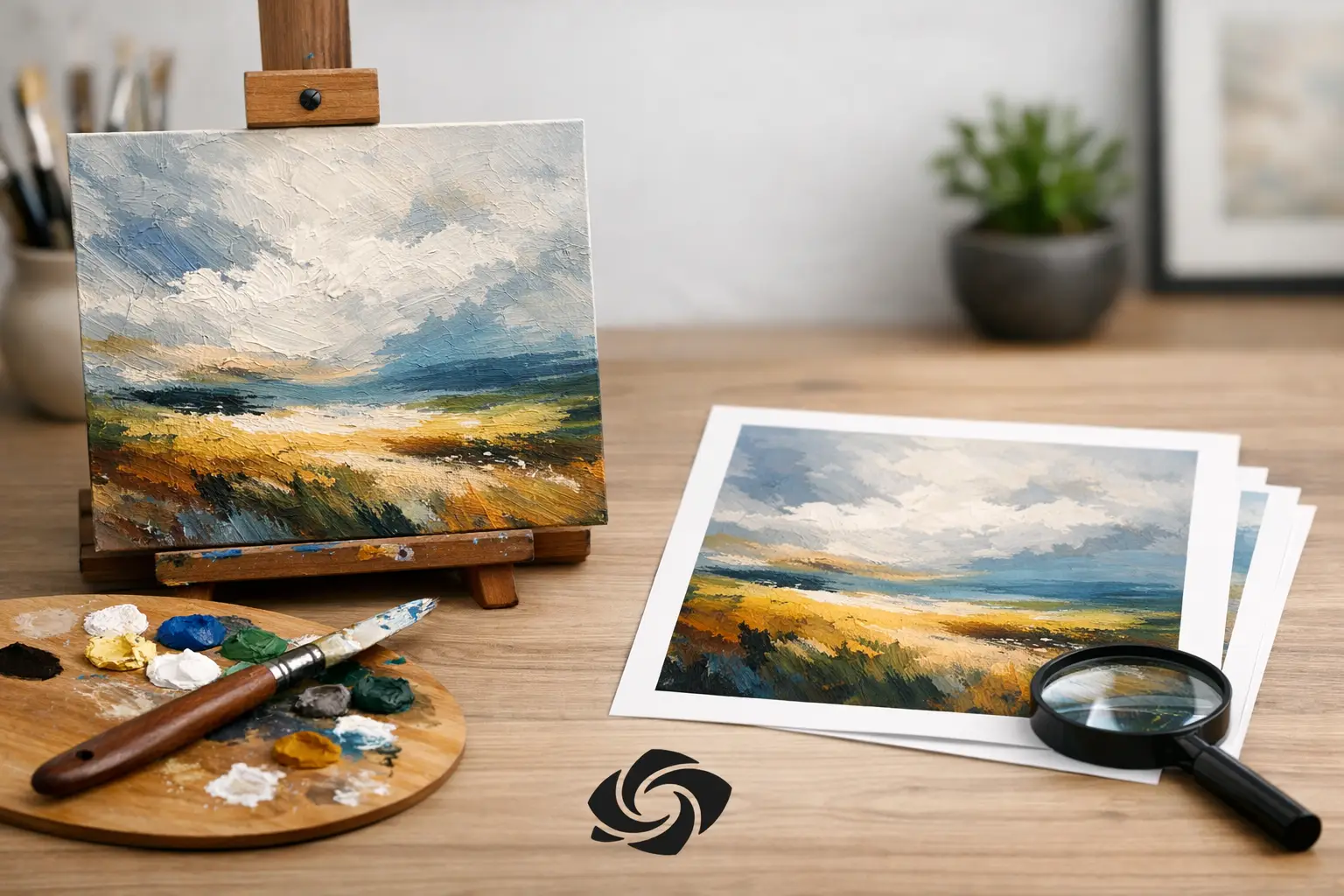
A lot of people stand in front of a piece they love and quietly ask the same question: should I buy the original, or would a print make more sense? That is the real heart of original art vs prints. It is not a test of taste or status. It is a question of how you want to live with art, what kind of connection you want to feel, and what makes sense for your space and budget.
If you are decorating a home, starting a collection, or shopping for something meaningful, both options can be worthwhile. The best choice depends less on rules and more on your goals.
Original art vs prints: what is the actual difference?
Original art is the one-of-a-kind work created by the artist’s hand. That might be a painting, drawing, collage, sculpture, or mixed-media piece. When you buy an original, you are buying the artwork itself, with its texture, scale, surface detail, and every small decision the artist made in real time.
A print is a reproduction of an original work. It can be produced in different ways and at different quality levels. Some prints are open edition, which means they can be reproduced in unlimited quantities. Others are limited edition, which means only a set number are made. Depending on the process, a print can still be beautiful, collectible, and artist-approved, but it is not the same object as the original.
That distinction matters, but not because one is automatically “better” in every situation. It matters because each offers a different kind of value.
Why original art feels different in person
There is a reason people often respond so strongly to original work when they see it up close. Surface matters. Texture matters. Scale matters. The brushwork, the layering, the subtle shifts in color, and even the imperfections all carry energy that is hard to duplicate.
Original art also tends to create a stronger personal connection. You are not just buying an image you like. You are bringing home the exact piece the artist made. For many collectors, that direct relationship is the point. The work becomes part of your daily life in a more intimate way.
There is also the matter of uniqueness. No one else has that exact artwork. If you value owning something singular, original art offers that without compromise.
For buyers interested in supporting working artists, originals can also feel more direct and meaningful. You are helping sustain the practice behind the piece, not just purchasing a decorative object. In a city with a strong studio culture like Houston, that artist-to-collector relationship can be one of the most rewarding parts of buying art.
Where prints make a lot of sense
Prints are sometimes treated like the lesser option, but that misses the point. A good print can be an excellent way to live with art you love.
The most obvious advantage is price. Prints open the door for new collectors, younger buyers, and anyone furnishing a home without stretching beyond their comfort zone. They also let people collect work by artists they admire at a more accessible price point.
Prints can be a smart fit when scale matters too. If you want a larger visual statement for a hallway, office, guest room, or apartment wall, a print may give you the impact you want without the price tag of a large original.
They are also useful for people who are still learning their taste. Not everyone wants their first art purchase to be a major investment. Buying a print can be a low-pressure way to start paying attention to what you respond to and how you want art to function in your space.
That said, not all prints are equal. A thoughtfully produced print on quality paper with strong color accuracy is very different from a mass-market poster. If you are considering prints, it is worth asking about edition size, printing method, materials, and whether the artist authorized or signed the work.
Cost, value, and what you are really paying for
Price is usually the biggest factor in original art vs prints, and that is completely reasonable. Originals generally cost more because they are unique and because they reflect the artist’s labor, experience, materials, and market.
But value is not just about future resale. Sometimes value is emotional. Sometimes it is aesthetic. Sometimes it is about supporting local artists and building a home filled with pieces that have a story.
Original art may hold or grow in value over time, but that should not be the only reason to buy it. The truth is that most people live with art long before they ever think about selling it. If a piece changes the feeling of a room, becomes part of your routines, and still matters to you years later, that is real value.
Prints usually offer less scarcity, which affects pricing and collectibility. Limited editions can carry stronger long-term appeal than open editions, especially when they are signed and well documented. Still, prints are often best approached as accessible art purchases first, not guaranteed investments.
Which works better for your space?
This is where practical decisions come in. Original art can transform a room, but it also asks for a little more consideration. You may be more careful about where it hangs, how much direct sunlight it gets, and what kind of environment it lives in. If you are buying an original on paper, framing and conservation matter.
Prints can feel easier and more flexible. They work well in casual spaces, rentals, offices, and rooms where you may want to rotate artwork more often. If you like changing things seasonally or experimenting with layout, prints give you freedom.
There is also a scale question. A small original can have incredible presence, but if you are trying to anchor a large wall, a print may solve the design problem more affordably. On the other hand, one carefully chosen original can bring more depth and character to a room than several decorative reproductions.
It depends on whether your priority is visual coverage, uniqueness, or long-term connection.
Questions to ask before you buy
Before making a choice, it helps to get clear on what you want this purchase to do.
Are you looking for a personal connection to an artist or a piece that marks a moment in your life? Original art may be the right move. Are you trying to build out a polished interior on a realistic budget? Prints may be the smarter starting point. Do you want to begin collecting but feel unsure about committing to higher price points? A limited-edition print can be a strong middle ground.
You should also ask where the work comes from. Was the print produced by the artist or with the artist’s approval? Is the original framed properly? What materials were used? These details do not need to make the process intimidating. They simply help you buy with more confidence.
For many people, the best path is not either-or. It is both. You might buy original work when you find something that really stops you in your tracks, then add prints in places where flexibility and affordability matter more.
How collectors often build a mix of both
Plenty of thoughtful art collections include both originals and prints. That approach is not a compromise. It is often a sign of someone buying intentionally.
An original might become the centerpiece in a living room or dining area, while prints fill out a hallway, bedroom, or office. A collector may buy an original from a local artist they connect with deeply, then purchase prints by other artists they admire as their budget allows.
This kind of mix creates a home that feels layered and personal rather than overly precious. It also makes art collecting feel more open, which matters. Not everyone wants to enter the art world through a high-pressure purchase. A welcoming gallery experience should leave room for curiosity, questions, and different budgets.
That is part of what makes local gallery spaces and working artist communities so valuable. Seeing art in person, talking with artists, and learning how pieces are made can shift the decision entirely. Sometimes a print you liked online does not compare to the original in real life. Other times, a print turns out to be exactly the right fit for your home and how you live.
So, should you buy original art or prints?
Buy original art when you want the real object, the one-of-a-kind presence, and the direct connection to the artist’s hand. Buy prints when you want accessibility, flexibility, and a lower-cost way to bring strong artwork into your everyday spaces.
Neither choice makes you a more serious or less serious art buyer. What matters is buying something you genuinely want to live with.
If you are standing in a gallery, looking at a wall, and weighing original art vs prints, trust the mix of instinct and practicality. Ask questions. Look closely. Notice what stays with you after you leave. The right piece is usually the one that keeps asking to come home with you.
