A lot of people love the idea of open studios right up until they arrive. Then comes the hesitation: Do you just walk in? Is it okay to ask prices? Are you supposed to know something about art before you start looking around? If you’ve ever wondered how to visit open studios without feeling awkward, the good news is that the whole point is access. These events are meant to bring people closer to artists, their process, and the work itself.
That makes open studios different from a typical retail experience and different from a museum visit too. You are stepping into a working creative space, often mid-process, where paint may still be drying and ideas may still be taking shape. For visitors, that is part of the appeal. You get to see the human side of art making, not just the finished piece on a polished wall.
How to visit open studios with confidence
The easiest way to approach an open studio is to remember that curiosity belongs there. You do not need collector credentials, formal art education, or a shopping plan. You just need enough time to look carefully and enough openness to have a real conversation.
It helps to slow down before you enter the first space. Open studios can be exciting, especially in a large arts district where dozens of artists may be participating at once. If you rush from door to door, everything can start to blur together. Give yourself permission to spend time with the work that catches your attention and to move quickly past what does not. That is not rude. It is honest.
Clothing matters less than people think, but comfort matters a lot. Wear shoes you can walk in, especially if you plan to visit multiple buildings or floors. Keep your bag manageable, since studios can be tight. If you are attending during a busy weekend event, expect a little noise, some foot traffic, and the possibility that an artist is speaking with someone else when you arrive.
A useful mindset is this: you are a guest, not an intruder. Respect the space, but do not act like you have to tiptoe around the room apologizing for being there. Artists open their studios because they want people to come in.
What makes open studios worth visiting
Open studios offer something galleries and online shopping cannot fully replicate. You get context. The materials, the sketches, the unfinished canvases, the tools on the table, and even the way the artist talks about their work can change how you see a piece.
For new buyers, that context can make original art feel much more approachable. Instead of wondering whether you are “supposed” to like something, you can respond to what is directly in front of you. You may discover that the piece you connect with most is not the largest one, the most expensive one, or the one that seems easiest to match with your sofa. Sometimes it is the one with a story that stays with you.
For longtime collectors, open studios can be just as valuable. You can track an artist’s development, see new directions before they are widely exhibited, and build a more personal understanding of the work. That direct connection often leads to stronger collecting decisions, not just faster ones.
In a place like Houston, where studio communities can bring together a wide range of styles and career stages, open studios also make the local art scene feel tangible. You are not just seeing objects for sale. You are seeing a creative ecosystem at work.
How to talk to artists without feeling awkward
Most visitors overthink this part. You do not need a clever opener. Start with what you genuinely notice. You can say that a color palette caught your eye, ask what material was used, or mention that a certain piece feels very different from the others in the room. Real observations lead to better conversations than performative art language ever will.
A few questions tend to work naturally. You can ask what the artist is working on lately, how a series developed, or what inspired a particular shift in style or subject matter. If you are interested in buying, it is completely fine to ask about pricing. It is also fine to ask whether the piece is available, whether there are others in a similar size, or whether the artist has shown this work before.
What is less helpful is treating the artist like they owe you a lecture on demand. Sometimes they are in the middle of a sale, greeting several guests, or trying to keep the day moving. Read the room. If the artist seems busy, a shorter conversation may be better. If the space is quiet and they are clearly open to chatting, you can go deeper.
Honesty goes a long way. You do not have to pretend you understand every reference. Saying, “I’m new to open studios, but I really like this piece,” is more welcoming than trying to sound like a curator.
What to do if you want to buy art
Open studios are one of the best places to buy original work because the process is more personal and often more transparent. You can ask direct questions about medium, framing, care, timeline, and price without the stiffness some people associate with traditional art spaces.
Still, buying on the spot is not your only valid option. Sometimes you know immediately that a work belongs with you. Sometimes you need a day to think, measure a wall, or check your budget. Both are normal. If you are interested but unsure, let the artist know. Ask for the title, dimensions, and price so you can remember the piece clearly.
If you are decorating a home, trust your real-life reaction more than a theoretical plan. People often arrive looking for something very specific and leave thinking about a work they never expected to love. That does not mean every impulse buy is wise. It means emotional connection is part of the decision, not a distraction from it.
Budget can feel delicate, but it should not stop you from engaging. Original art exists at many price points, especially in studio environments where you may encounter works on paper, smaller pieces, or studies alongside major finished works. If a piece is out of range, that is fine. Ask if the artist has smaller works available. That is a practical question, not an insult.
How to get more out of the visit
The best open studio visits are usually not the ones where you try to see everything. They are the ones where you notice more. If a building has many participating artists, choose depth over speed. Spend a little longer in the spaces that pull you in.
Take notes if you are visiting several studios. After the fifth or sixth conversation, details can start to mix together. A quick note in your phone about an artist’s name, a series title, or a standout piece can help later, especially if you plan to return.
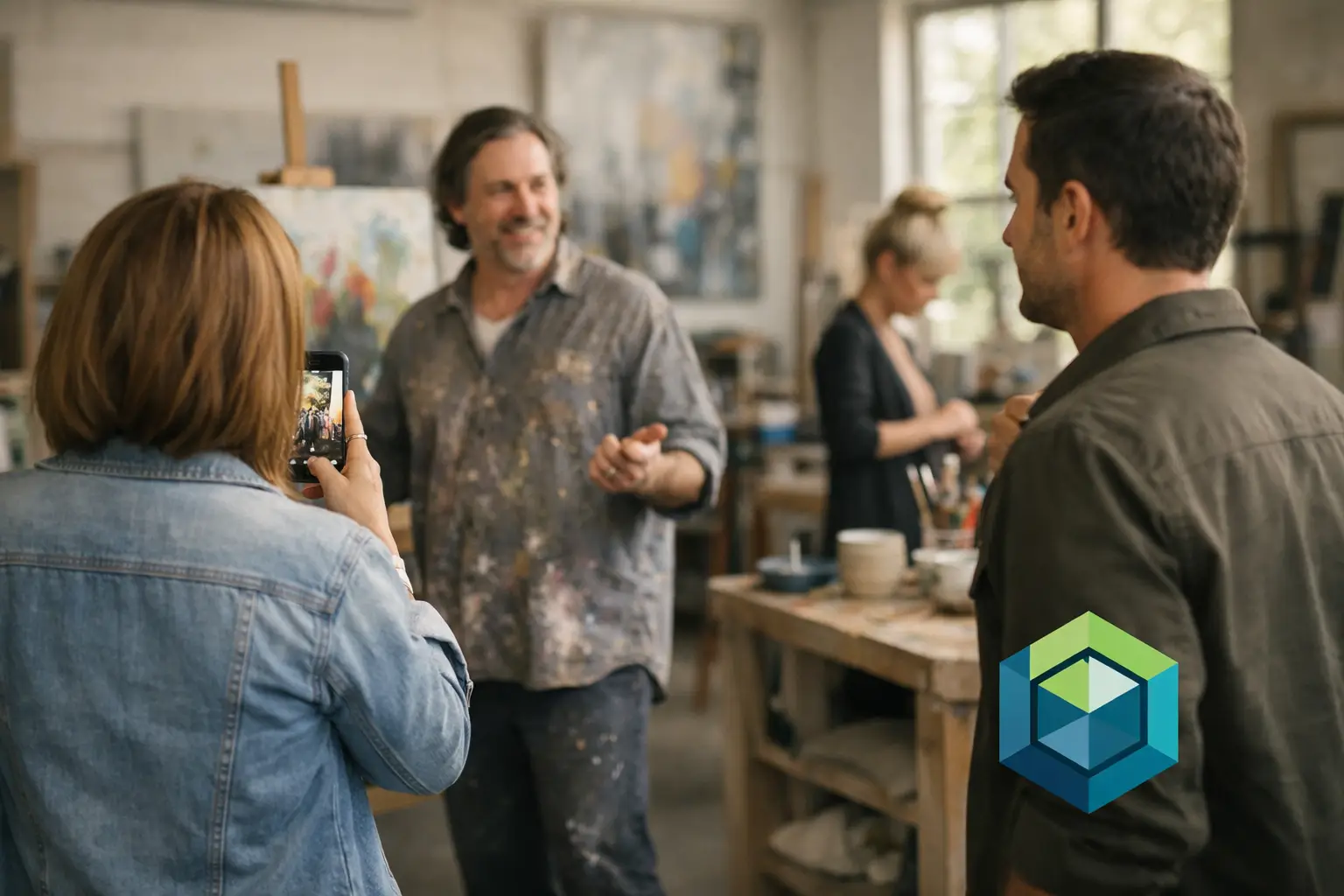
Photos are a maybe, not a given. Some artists are fine with it, others are not, and some may be comfortable with photos of finished work but not of works in progress. Ask first. The same goes for sharing images online. A studio is a professional workspace, not just a backdrop.
If you attend with friends, give each other room to have different reactions. Open studios are more enjoyable when people are free to linger, split up briefly, and compare notes later. One person may be drawn to abstract painting while another falls for sculpture or printmaking. That variety is part of what makes studio visits so rewarding.
And if you are local, think of open studios as something you can do more than once. A return visit often reveals more than the first one. Work changes. Artists rotate what is on view. Conversations get easier when the setting feels familiar. At a place like Sawyer Yards, where creative energy is built into the experience, repeat visits can turn casual interest into a real relationship with the local art community.
A few things not to overthink
You do not need to buy something to justify being there. You do not need to have the right vocabulary. You do not need to understand every piece immediately. Open studios are one of the rare art experiences where access is built into the format.
The only real mistakes are the obvious ones: touching work without permission, monopolizing the artist’s time when others are waiting, or treating the space casually in a way that ignores the labor happening there. Beyond that, there is plenty of room to be yourself.
If you have been meaning to go but keep putting it off, go anyway. Walk in, look closely, ask one real question, and let the rest unfold from there. That is usually all it takes for open studios to stop feeling intimidating and start feeling like what they are meant to be – a lively, welcoming way to meet art where it is actually made.
