The first piece you buy will probably teach you more than a month of scrolling, second-guessing, and asking yourself whether you are “ready” to be a collector. If you have been wondering how to collect original art, the good news is that there is no secret handshake, no perfect budget, and no requirement that your walls already look like a magazine spread. You start by paying attention to what moves you, then learning enough to buy with clarity instead of hesitation.
That matters because collecting original art is different from buying decor. You are not just filling space. You are choosing work made by a real person, with a point of view, and bringing that story into your home or office. For many people, that shift is exactly what makes collecting feel personal, memorable, and worth doing.
How to collect original art without overthinking it
A lot of first-time buyers assume they need expert-level knowledge before making a purchase. In reality, confidence usually comes after you start, not before. The smartest way in is to balance instinct with a little structure.
Begin with your own response. What kind of work keeps pulling you back in? Maybe it is large abstract painting with bold color, a quiet photograph, a layered mixed-media piece, or a drawing that feels intimate up close. Your taste may be broad, and that is fine. Early collecting is often less about building a perfectly unified collection and more about noticing patterns in what genuinely holds your attention.
Then give yourself a framework. Think about where the work will live, how much you want to spend, and what kind of relationship you want with the art you buy. Some collectors want one strong statement piece. Others want to build slowly, piece by piece, with room for their taste to evolve. Neither approach is better. It depends on your budget, your space, and how you like to make decisions.
Start with what you love, not what you think you should love
This sounds obvious, but it is where many people get stuck. They worry that buying art based on emotion is somehow unsophisticated. Actually, that emotional response is one of the best reasons to buy original work.
The catch is that “love it” should mean more than “it matches the couch.” Art can absolutely live well with your space, but if color coordination is the only reason you buy, the connection may not last. A stronger test is this: would you still want to look at it every day if you moved it to a different room? Would you remember it a week later? Did it stop you in your tracks when you saw it in person?
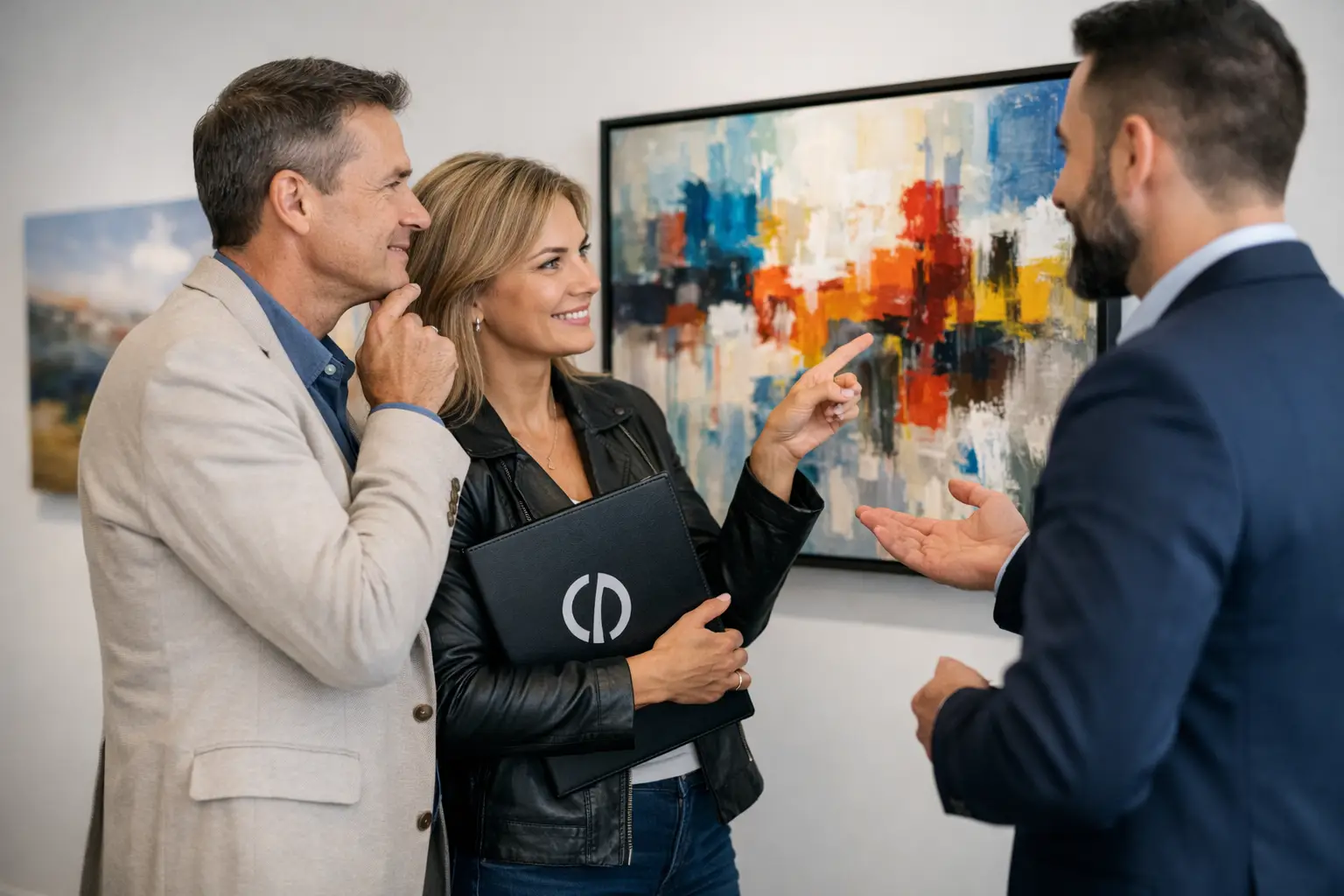
That last point matters. Original art is best experienced up close whenever possible. Scale changes everything. Texture changes everything. A painting that looks quiet online may feel electric in person, while a piece that photographs beautifully may not have the same presence on a wall. Visiting exhibitions, galleries, and open studios helps train your eye fast because you start to see how materials, surfaces, and size affect the experience.
Set a budget that makes collecting sustainable
If you want to know how to collect original art for the long run, start with a budget that leaves room for enjoyment. Stretching too far on a first purchase can make collecting feel stressful instead of exciting.
A realistic budget should account for more than the price tag. Framing, installation, and future purchases all matter. If you are buying work on paper, custom framing may be part of the total cost. If you are buying a larger piece, you may want to think ahead about where it will hang and whether it needs special handling.
It also helps to stop thinking in terms of “expensive” or “cheap” and start thinking in terms of value. Original art can be more accessible than people assume, especially when you buy from working artists and local galleries that represent a range of price points. A smaller original piece by an emerging artist may be a better first purchase than waiting years for the one work that feels out of reach.
Learn the basics before you buy
You do not need an art history degree, but a few practical questions go a long way. Ask about the artist, the medium, the date, the size, and whether the work is one of a kind or part of an edition. If it is framed, ask whether the frame is archival or decorative. If it is a print, ask whether it is signed and numbered. If it is a painting, ask about materials and care.
These questions are not awkward. They are part of buying responsibly, and a good gallery should welcome them. The goal is not to turn an emotional purchase into a cold transaction. The goal is to understand what you are bringing home.
Provenance can matter too, especially as your collection grows. That simply means documentation of the work’s origin and ownership. For a first-time buyer, this may be as straightforward as a receipt, an artist bio, and basic details about the piece. Keeping those records organized is smart from day one.
Buy from places that make art feel accessible
Where you buy shapes how comfortable and informed you feel. The best environments for new collectors are the ones that invite questions, provide context, and make room for discovery without pressure.
That is one reason local galleries and artist studio spaces are so valuable. You get to see the work in person, learn about the artist’s practice, and understand the difference between a quick visual impression and a lasting connection. In Houston, places rooted in the local arts community can make that experience especially rewarding because they bring collectors into direct contact with the creative energy behind the work.
If you are new to the process, open studio events are particularly useful. You can compare styles, materials, and price points in a more relaxed setting, and the experience often feels more human than transactional. At Art Machine Gallery, that approachable, community-based atmosphere is part of what helps first-time buyers realize that collecting original art is not reserved for insiders.
Let your collection grow naturally
One of the biggest myths about collecting is that every piece needs to fit a master plan. Sometimes a collection does develop around a theme, medium, subject, or period. Sometimes it grows through intuition and lived experience. Both paths can lead somewhere meaningful.
In the beginning, it is often better to notice connections after the fact than to force them too early. You may discover that you consistently gravitate toward strong linework, saturated color, or work by artists exploring place, identity, or memory. That kind of pattern is useful because it helps refine your eye without boxing you in.
At the same time, leave room for surprise. A collection with a little tension in it can feel more alive than one built around strict sameness. A quiet drawing can sharpen the impact of a bold painting. A sculptural piece can change how the whole room feels. Collecting gets more interesting when you allow your taste to mature instead of freezing it at the moment of your first purchase.
Think about living with the art
Good collecting is not only about acquisition. It is also about placement, care, and daily experience. Before you buy, picture how the work will function in your space. A large, high-energy painting may be perfect for an entryway or living room, while a more contemplative piece may belong somewhere slower and quieter.
Lighting matters. So does scale. A common mistake is buying work that is too small for the wall or too visually weak for the room. If you are unsure, ask for dimensions and measure your space before committing. Many collectors find that taping out the size on the wall helps them understand what a piece will actually feel like at home.
Caring for art is usually simple, but not identical across mediums. Works on paper need protection from direct sun and humidity. Some materials are more delicate than others. Asking how to care for a piece is part of respecting the work and protecting your investment.
Collecting art is also a way to support artists
This is one of the best parts, and it should not get lost in all the practical advice. When you buy original art, you are doing more than improving your space. You are supporting the artist’s time, labor, and continued practice. You are helping make more work possible.
That connection can be especially meaningful when you collect locally. You may follow an artist’s growth over time, attend future exhibitions, or see their work evolve across years. Your collection becomes tied to a place, a creative community, and a set of relationships that feel real.
For many collectors, that is what turns a purchase into something lasting. The art reminds you where you found it, what caught your eye, and why you said yes.
If you are still waiting for the moment when you will feel fully qualified to begin, let that go. The better question is not whether you know enough yet. It is whether you are ready to start paying closer attention to what you want to live with, support, and keep close.
