
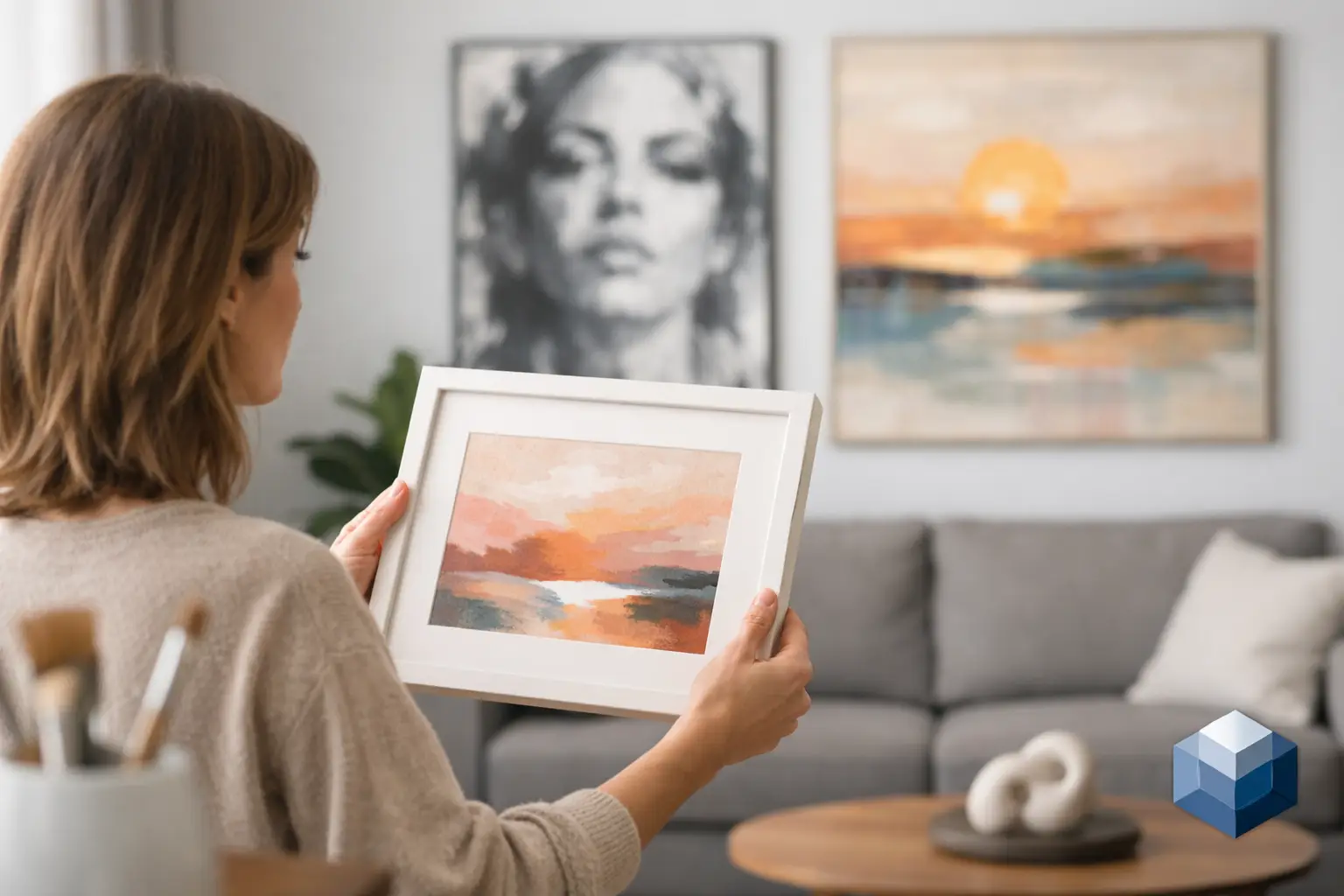
Apartment walls tell on you a little. A blank wall says you just moved in, or maybe you never quite settled. A mass-produced print says you needed something fast. Original art for apartments does something different – it makes a space feel lived in, chosen, and personal in a way furniture alone rarely can.
That matters even more in apartments, where square footage is limited and every visible detail carries more weight. You may not be replacing countertops or knocking down walls, but the right painting, drawing, or mixed-media piece can shift the whole feel of a room. It can add warmth to a rental, give structure to an open-plan layout, or create a sense of calm in a small bedroom that doubles as an office.
Why original art for apartments works so well
Apartments ask a lot from the things inside them. A dining area might also be your workspace. A hallway might be your best chance to make an impression. The living room has to feel comfortable, stylish, and flexible all at once. Original art earns its place because it does more than fill wall space.
It brings texture, depth, and presence. Even a modestly sized original piece has an energy that reproductions often flatten out. You notice the brushwork, the material choices, the slight imperfections that make the work feel alive. In a compact home, those qualities matter because the viewer is usually closer to the art.
There is also the personal side. Apartments can feel temporary, especially in cities where people move for work, school, or changing family needs. Buying original work is one way to make a leased space feel genuinely yours. You may not own the building, but you can absolutely own the atmosphere.
Start with the room, not the wall
A common mistake is shopping for art as if it exists in isolation. In apartments, context matters first. Before you choose a piece, think about what the room needs.
A living room usually benefits from a stronger visual anchor. That might mean one larger statement piece over the sofa or a pair of works that create balance without feeling too formal. A bedroom often works better with art that supports rest rather than constant stimulation. That does not mean it has to be neutral or quiet, but the mood should fit the way you want the room to feel at the end of the day.
Entryways, kitchens, and hallways are different. These are often overlooked in apartments, yet they are perfect places for original work. A narrow wall can hold a vertical piece with real impact. A small painting in a breakfast nook can make an everyday corner feel intentional. In spaces that people pass through quickly, art can create a moment of pause.
Scale matters more than people think
If there is one issue that trips up apartment buyers, it is size. Art that is too small can make a room feel unfinished. Art that is too large can crowd the space and throw off the proportions.
The fix is not complicated, but it does require honesty about your wall. Measure the area you want to fill and account for the furniture beneath it. Over a sofa, for example, the artwork should generally relate to the width of the sofa rather than float awkwardly in the center. In a smaller apartment, a single well-scaled piece often looks cleaner and more confident than several tiny works trying to do the same job.
That said, small art has a place. It works beautifully on shelves, in corners, beside bookcases, or as part of a tighter salon-style grouping. The trade-off is that small pieces need a little more intention. They should feel placed, not stranded.
Large statement pieces in smaller homes
People often assume apartment living means buying only small art. Not necessarily. A bold, larger work can actually make a compact room feel more resolved. Instead of visual clutter from multiple decorative items, one strong piece gives the eye somewhere to land.
The catch is that the composition needs breathing room. If your room is already packed with storage, patterns, and furniture, a quieter large piece may work better than one with constant high-contrast movement.
When a gallery wall makes sense
Gallery walls can be great in apartments, especially when you want flexibility or are building a collection over time. They are also useful when your budget favors smaller original works. But they are not automatic.
If your apartment already feels busy, a gallery wall can tip into chaos. Keep some visual consistency through framing, spacing, or palette. The goal is collected, not crowded.
Choose art by feeling first, then color
A lot of buyers start with the sofa color and work outward. That is understandable, but it can lead to safe choices that match the room without adding much life to it. Better results usually come from choosing art that creates the right feeling first.
Ask yourself what you want the room to do. Wake you up? Slow you down? Start conversations? Add edge to a polished interior? Once that is clear, color becomes easier to handle.
Art does not have to match your apartment. In fact, perfect matching can feel flat. A room with mostly warm neutrals might benefit from a cool-toned painting that introduces tension in a good way. A sleek modern apartment might need something with visible texture and handmade character. Contrast is often what makes a space interesting.
Budget without buying timidly
Many people assume original art is out of reach, especially if they are furnishing an apartment and watching every expense. The reality is more flexible. Original work exists at many price points, particularly when you buy from local artists, emerging artists, or galleries committed to accessibility.
The better question is not whether you can buy original art, but where you want to place your budget. You may choose one meaningful piece for the room you use most and build gradually from there. That approach usually creates a stronger home than scattering the same budget across generic decor.
There are trade-offs, of course. Framing can add cost. Larger work usually costs more. Highly detailed or technically complex pieces may sit at a higher price point than simpler works of the same size. But buying original does not have to mean buying huge or buying all at once.
For apartment dwellers, a smart move is focusing on versatility. Choose work you would want to live with in your current place and your next one. A good piece should travel well, visually and emotionally.
Original art for apartments should reflect your real life
This is where the best choices usually happen. The strongest apartment interiors are not built from rules alone. They reflect the people who live there.
If you love bold contemporary work, do not talk yourself into something muted because it seems more “adult.” If your space is minimal, that does not mean your art has to disappear into the wall. And if you are new to collecting, you do not need a perfect vocabulary for what you like. You just need a clear response.
Original art has a way of becoming part of your routine. You see it in the morning while making coffee. Guests ask about it. It starts to hold memories of different chapters of your life. That is especially powerful in apartments, where home can sometimes feel temporary on paper but deeply personal in practice.
Buy where conversation is part of the experience
One of the easiest ways to choose well is to buy in places where you can actually talk about the work. Seeing art in person helps you understand scale, texture, and presence far better than a screen can. It also gives you context – who made it, what materials were used, how it might live in a home.
That is one reason local gallery spaces and working artist studios are so valuable. They make collecting feel approachable. You can ask practical questions, compare pieces, and discover artists whose work grows with you over time. In Houston, that direct connection to artists and exhibitions is part of what makes the experience feel less intimidating and more rewarding, whether you are buying your first piece or adding to a collection.
Art Machine Gallery is built around that kind of access, with original work by Houston-area artists in a setting that welcomes both serious collectors and people simply figuring out what they love.
A few practical details before you hang
Apartment living does come with logistics. Check your lease, use the right hanging hardware, and think about sunlight, humidity, and traffic flow. If you move often, lighter framed works or unframed pieces on paper can be easier to manage than oversized glazed pieces.
Still, do not let practicality drain the joy out of the process. Good art is not just another item to coordinate. It is one of the fastest ways to make an apartment feel grounded, expressive, and unmistakably your own.
If you are choosing between something convenient and something that actually moves you, trust the piece you will still want to look at after the boxes are gone and the apartment finally feels like home.
