A great piece of original art can stop you in your tracks, whether you find it beneath bright gallery lights or while weaving through rows of booths at a busy weekend event. In the gallery vs art fair conversation, the better choice is not always about price or prestige. It is about how you want to encounter art, how much time you want to spend with it, and what kind of relationship you hope to build with the artist and the local creative community.
For Houston collectors, decorators, first-time buyers, and curious art lovers, both settings offer real opportunities to find work that feels personal. They simply create very different experiences.
Gallery vs Art Fair: The Core Difference
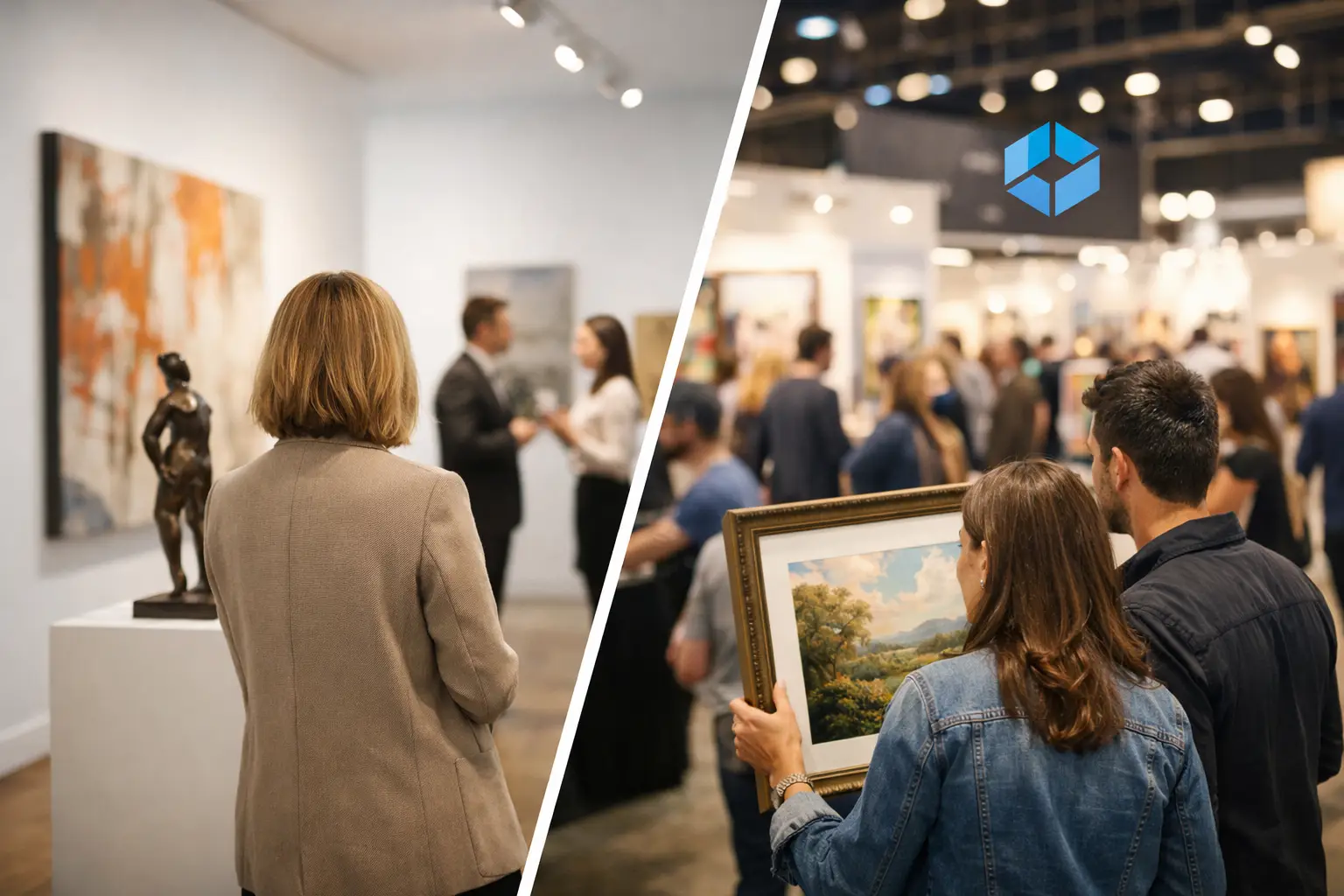
A gallery is a dedicated space built around presentation, curation, and ongoing relationships. The work is selected and installed with intention, allowing each artist and exhibition to have room to breathe. You can return to see a piece again, ask questions, learn about the artist’s practice, and consider how the work might live in your home or workplace.
An art fair is an event, often held over a single weekend or a few days, where many artists, galleries, or vendors present work at once. It is energetic, social, and full of discovery. You may see dozens or hundreds of artists in one afternoon, from painters and photographers to ceramicists, printmakers, and jewelers.
Neither format is inherently better. A fair is built for breadth and momentum. A gallery is built for depth and context. The right fit depends on what you need from the experience.
What You Gain From Visiting a Gallery
A gallery visit gives you something that is hard to recreate in a crowded event: focused attention. Rather than scanning booth after booth, you can spend time with a smaller, carefully selected body of work. That matters when you are choosing art you may live with for years.
Context Makes Collecting Easier
Seeing work in a gallery setting helps you understand scale, materials, color, and visual presence. A painting that looks modest in a photo can command an entire wall in person. A textured mixed-media piece may reveal details that disappear on a screen. A sculpture needs room around it to show how it changes from different angles.
Galleries also provide useful context. You may learn what inspires an artist, how a series developed, or why a particular material matters to their practice. That background does not have to make collecting feel academic or exclusive. Often, it simply helps you recognize the story you are responding to.
For new collectors, this quieter setting can remove much of the pressure. You do not need to know the right vocabulary. You can ask what a work costs, whether it is framed, how it is cared for, or if the artist has other pieces available. A welcoming gallery should make those questions easy.
A Relationship That Can Continue
Buying through a gallery can open a longer connection to an artist’s work. If you love a particular painter but the available pieces are not the right size or palette, the gallery may be able to share future work, recommend related artists, or explain commission possibilities.
That continuity is especially valuable for people building a collection over time. Your first purchase may be a small work for a hallway. A few years later, you may be looking for a statement piece for a new home or office. A gallery that understands your taste can make each step feel more confident and more personal.
Curated Does Not Have to Mean Intimidating
Some people hear the word “gallery” and picture a room where they are afraid to ask for a price. That old stereotype keeps too many people from discovering original art. The best local galleries are places to look closely, ask questions, meet artists, and enjoy the work without pretending to be an expert.
At Art Machine Gallery, exhibitions and open studio opportunities create a direct path into Houston’s working artist community. Visitors can experience finished work in a curated setting while also seeing that art is made by real people in active studios nearby. That mix makes the collecting experience feel grounded, not distant.
What Makes Art Fairs Worth Your Time
Art fairs have a different kind of magic. They put creative abundance in front of you all at once. You can discover an artist whose work you have never encountered, compare styles quickly, and leave with a sharper sense of what you are drawn to.
For someone furnishing a home, shopping for a gift, or starting a collection, that range can be incredibly helpful. You might arrive looking for a landscape and realize that bold abstract work, hand-pulled prints, or ceramic wall pieces are what truly catch your eye.
Discovery Happens Fast
An art fair is ideal when you want to see a wide cross-section of artists in a limited time. There is a sense of surprise around every turn, along with the pleasure of meeting creators directly at their tables or booths. Many buyers enjoy hearing an artist explain their process in their own words, especially when the work is fresh from the studio.
Fairs can also be a strong entry point for new collectors because they often include a broad price range. Small prints, drawings, studies, and functional pieces may make original art feel more accessible. Buying a smaller work from an artist you admire can be a meaningful first step, not a lesser choice.
The Energy Can Also Be a Challenge
The same energy that makes a fair exciting can make decisions harder. Crowds, limited time, music, weather, and the fear that a piece will sell before you return can create pressure. It is easy to make a quick purchase because the moment feels exciting, then realize later that you did not ask about dimensions, framing, delivery, or care.
That does not mean you should avoid fairs. It means you should give yourself permission to slow down. Take a photo of the work and the artist’s information if allowed. Step outside, grab a coffee, and think about where the piece would go. If you love it after a little breathing room, you are more likely to feel good about the decision.
Pricing: Do Not Assume One Is Cheaper
A common gallery vs art fair assumption is that fairs are always less expensive because buyers are meeting artists directly. Sometimes that is true, particularly for unframed work, small editions, or pieces made specifically for an event. But price reflects much more than where the work is shown.
Materials, size, labor, an artist’s experience, framing, edition size, and demand all shape the price of original art. A gallery may offer work at a range of price points, from approachable small pieces to major works for established collectors. A fair may include excellent values, but it can also feature work at premium prices.
The better question is whether the price feels fair for the work, the artist’s practice, and your budget. Ask directly. Reputable artists and galleries understand that collecting is a financial decision as well as an emotional one.
How to Choose the Right Setting for You
Choose a gallery when you want time, guidance, and a more considered view of an artist’s work. It is especially useful if you are looking for a specific size, building a cohesive collection, purchasing for a professional space, or wanting help beyond the day of purchase.
Choose an art fair when you want variety, spontaneous discovery, and the chance to meet many artists in one outing. It is a wonderful format for exploring your taste, finding smaller works, and making a day of local culture with friends or family.
You do not have to pick a side. In fact, the most engaged collectors often do both. They visit fairs to discover new names, then follow artists and galleries to see how those practices develop. They attend exhibitions to look slowly, then return to fairs when they want the thrill of a crowded room full of possibility.
A Better Way to Buy Original Art
Wherever you shop, begin with your own response. Notice which work makes you pause, look again, or imagine a place for it in your daily life. Ask about the artist, the materials, and the story behind the piece, but do not wait until you feel like an expert to buy art you love.
Houston’s creative community is full of artists making ambitious, memorable work right now. Visit the fair when you want the buzz. Visit the gallery when you want to linger. The piece that stays with you after you leave is worth another look.
