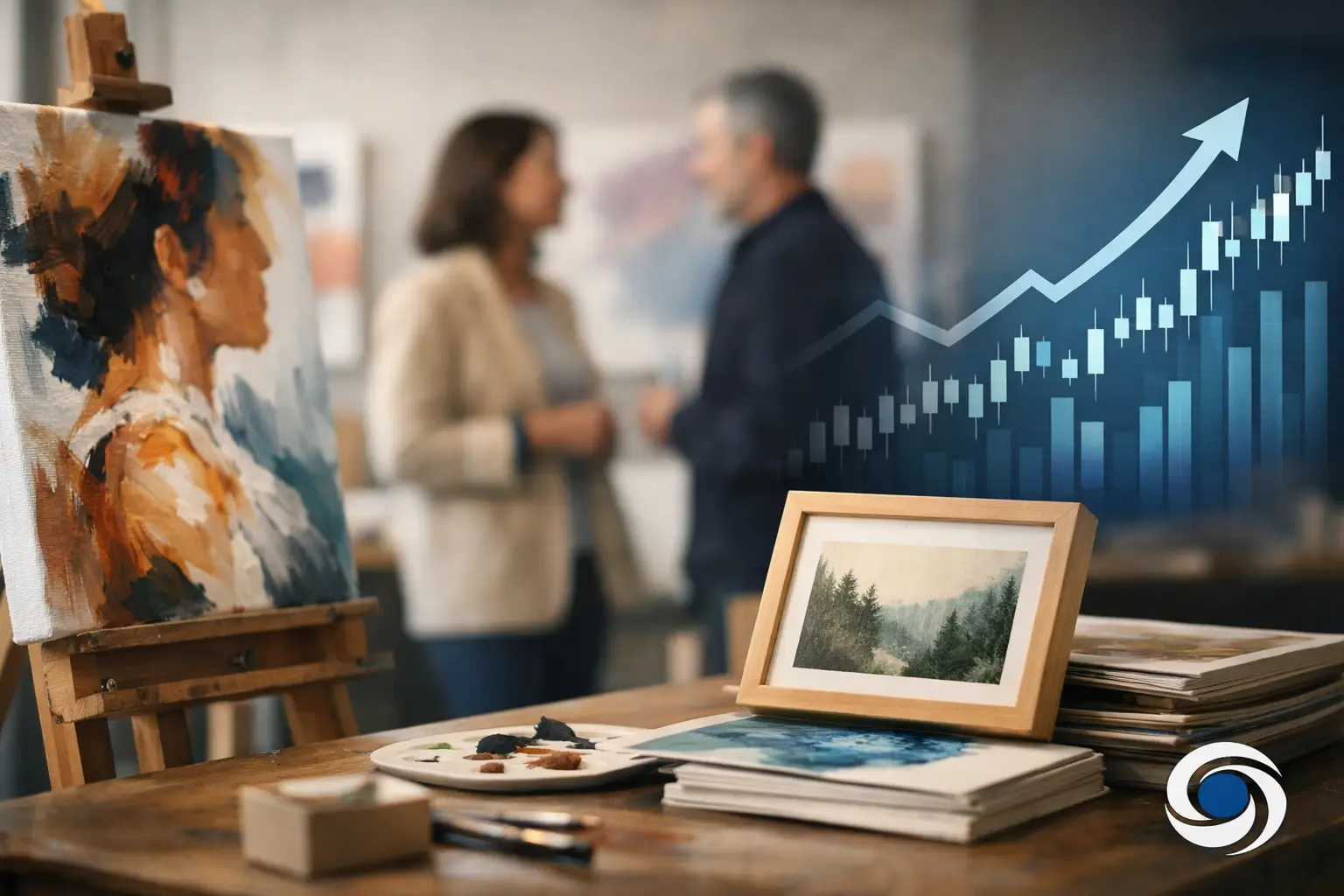
A lot can change for an artist between their first sold painting and their first sold-out show. The pace is faster, buyer expectations are shifting, and the most interesting emerging artist market trends are not just happening online or in major coastal cities. They are showing up in local galleries, studio visits, community events, and in the way new collectors decide what feels worth bringing home.
For artists, that means opportunity – but not every opportunity is equally useful. For collectors, it means access to more original work than ever, but also more noise to sort through. The current market rewards connection, consistency, and a point of view. It does not always reward hype.
Emerging artist market trends are getting more local
One of the clearest shifts in the market is a renewed interest in local discovery. Buyers still pay attention to national names and big auction headlines, but many collectors are spending more time looking close to home. They want to know who made the work, where it was created, and what community it comes from.
That is good news for emerging artists working in active creative districts and studio communities. A collector who can meet an artist in person, ask questions, and see the work outside a purely digital setting often feels more confident making a first purchase. For newer buyers especially, that face-to-face experience lowers the pressure. The work becomes less abstract and more memorable.
This trend also changes what galleries do best. The strongest local galleries are not just hanging work on walls. They are building trust, giving context, and creating repeat opportunities for audiences to return. In a city with a strong studio culture, that kind of visibility matters because discovery happens through relationships, not just algorithms.
Collectors are buying earlier, but more selectively
There was a time when many buyers waited for broader validation before purchasing an emerging artist’s work. That still happens, but the hesitation is softer now. More collectors are comfortable buying earlier in an artist’s career, especially when the work feels distinct and the pricing is still accessible.
The trade-off is that collectors have become more selective. They are not simply buying “affordable art.” They are buying conviction. They want to see a clear visual language, a thoughtful body of work, and signs that the artist is building something with staying power.
That does not mean every artist needs a perfectly polished brand. In fact, too much polish too early can feel forced. What buyers respond to is coherence. They want to understand what the artist cares about and why the work looks the way it does. An evolving practice is fine. A scattered one is harder to place.
Price accessibility matters, but so does pricing discipline
Another important shift is how pricing works at the entry level. Accessible price points continue to bring new buyers into the market, especially buyers furnishing homes, starting collections, or purchasing original art for the first time. Smaller works, studies, works on paper, and limited runs of lower-priced originals often move quickly because they feel attainable without feeling disposable.
But there is a difference between approachable pricing and underpricing. Emerging artists who price too low can create problems later, especially if demand grows. Collectors notice when prices feel inconsistent from show to show. Galleries notice too. A healthy pricing structure tells buyers the artist values the work and has a plan.
The market tends to respond well when artists raise prices gradually and with reason – stronger exhibition history, larger scale, increased technical ambition, or higher demand. Sudden jumps can scare off early supporters. Prices that never move can signal stagnation.
In-person experiences still close the sale
For all the attention paid to digital selling, in-person experiences remain one of the strongest drivers of trust in the emerging market. People still want to see texture, scale, color shifts, framing, and presence. They want to understand how a piece lives in a room.
This is especially true for buyers who are new to collecting. Photos can get them interested. A well-installed exhibition or open studio often gets them to commit. The physical experience answers questions they may not even know they have, from craftsmanship to emotional impact.
That does not mean digital visibility is less important. It means digital and physical spaces now work best together. Strong social presence can introduce the artist. A gallery exhibition, open studio, or studio visit often deepens the relationship enough to make a purchase feel personal rather than transactional.
For spaces that combine exhibitions with artist access, this trend is a real advantage. When visitors can see work on the wall and also connect with the maker behind it, collecting feels less intimidating and more human.
Emerging artist market trends favor artists with a real point of view
Style trends come and go fast, but one thing keeps showing up across the market: buyers are drawn to artists who have something to say and a recognizable way of saying it. That does not require a dramatic artist statement or a trendy social persona. It requires clarity.
Collectors are getting better at spotting work that follows a market aesthetic without much depth behind it. Decorative appeal still matters – people live with the art they buy – but the strongest momentum tends to build around artists whose work can hold attention over time.
Sometimes that point of view is conceptual. Sometimes it is rooted in material, process, memory, place, or identity. Sometimes it is simply a disciplined visual language that feels unmistakably personal. The specifics vary. The pattern is consistent.
This matters for artists who feel pressure to make work that seems more sellable. The market does reward accessibility in certain ways, but it rarely rewards imitation for long. Work that starts from a genuine center tends to travel further than work made to match a moment.
Social media helps, but it is not the whole market
Social media still plays a role in artist discovery, but buyers have become savvier about the difference between visibility and substance. A strong following can open doors. It can also create a false sense of market demand if engagement does not translate into real relationships, exhibitions, or sales.
For emerging artists, the healthiest approach is usually to treat social platforms as one tool, not the foundation of the entire career. A thoughtful feed can show process, build familiarity, and invite people into the work. But a sustainable practice usually depends on a broader mix – gallery partnerships, in-person events, studio communities, collector referrals, and a consistent body of work.
Collectors feel this shift too. Many are less impressed by popularity alone and more interested in context. They want to know where the artist has shown, how the work is developing, and whether the artist is part of an active creative community.
Buyers want connection, not just decoration
One of the most encouraging changes in the market is that more people want art with a story they can actually connect to. That does not mean every purchase needs a dramatic backstory. It means people increasingly care about who they are supporting.
That is why local galleries and artist-centered spaces matter so much in the emerging market. They make room for conversation. They help buyers understand process, influences, and the person behind the work. That context often makes the piece more meaningful once it enters a home or collection.
It also broadens the collector base. Not everyone walks into a gallery thinking of themselves as a collector. Some are simply looking for something original, personal, and well-made. When the experience is welcoming, not precious, those visitors often become repeat buyers over time.
In places like Sawyer Yards, where the creative energy is tangible and artists are part of the experience, that shift feels especially visible. Spaces such as Art Machine Gallery meet this moment well because they make discovery feel direct, local, and approachable without lowering the standard for quality.
What this means for artists and collectors now
The emerging market is not easier than it used to be. It is just more relationship-driven. Artists need more than exposure. They need the right kind of exposure – the kind that puts their work in front of people who are ready to engage, ask questions, and come back. Collectors need more than endless options. They need context, trust, and a reason to care.
That is where the strongest momentum is building. Not around empty buzz, but around original work, real community, and spaces that make those connections visible.
If you are an artist, the best signal you can send right now is not trend-chasing. It is consistency, clarity, and a willingness to keep showing up. If you are a buyer, the smartest move may be simpler than it sounds: spend time where artists are actually working, look closely, and trust the pieces that stay with you after you leave.
